

Gift & Grit: Heather and Ingrid Hutt on Legacy, Leadership, and Los Angeles
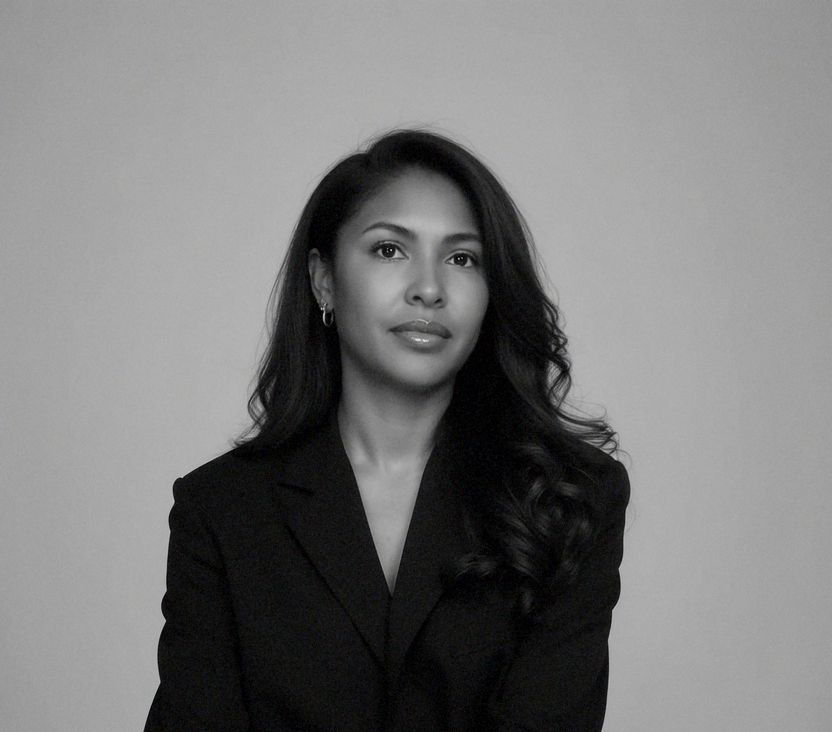

History remembers sisterhood in pairs: Phylicia and Debbie. Venus and Serena. Women bound by blood, brilliance, and impact. In Los Angeles, another sister act builds a legacy, Heather and Ingrid Hutt.
“When Ingrid was born,” she says, “my mother told me this was my gift… and that I needed to take care of it. And she handed me the baby.”
In that simple, intimate moment charged with meaning, a lifelong thesis for the Hutt family was adopted: sisterhood as stewardship. Not just the closeness of siblings, but responsibility. Not just love, but leadership.
Today, the Hutt sisters are known across Los Angeles in two very different arenas. Heather Hutt serves as Los Angeles City Councilmember for the historic 10th District, stepping into a lineage that includes trailblazers like Tom Bradley. Ingrid Hutt, a veteran operator across politics, real estate, and consulting, has taken on a bold new role in sports; acquiring and rebuilding the United States Basketball League, using basketball as a vehicle for community correction and second chances.
Before elected office and professional sports ownership, there was South Los Angeles. A single mother. Political meetings. Homework stapled to programs. And a grandmother who left an indelible mark on their lives. The heart of their story starts in a household led by a single mother who didn’t raise children to simply succeed. She raised them to serve.
This is a story of gift and grit.
A Household Built on Purpose
Heather recalls their mother’s framing with clarity: “She sat us all three down because she was a single mom and said, ‘It’s just you guys. It’s the three of you.’” Heather, the oldest, is quick to clarify the myth of the “perfect oldest child.” She was the one “getting in trouble,” pushing curfew, losing phone privileges. Ingrid, watching closely, learned what not to do. In that way, even mistakes became mentorship.
Yet Ingrid’s version of rebellion wasn’t just teenage defiance—it was activism.
She remembers organizing other kids to protest a neighborhood injustice: Bob’s Big Boy wouldn’t let students use the restroom unless they bought something. Heather refused to accept it. “If I buy a donut for ten cents, I’m a patron. Correct? So I get to use that restroom.” She protested anyway. In a full-circle twist that feels almost scripted by LA itself, Heather notes that the hospital Ingrid where was born is now the site of a major mixed-use development. Heather even saved a brick from the demolition, a tangible reminder of beginnings that still matter.
Mentors, Movement, and Women Who “Went Hard in the Paint”
Ask the Hutts about role models and you’ll hear a roll call of California history: Gwen Moore, Maxine Waters, Diane Watson, Yvonne Burke women whose leadership wasn’t theoretical. It was practiced, demanded, and taught in real time. Ingrid describes being mentored by Kay Hickson from an early age learning policy, professionalism, and how to conduct yourself in rooms where power moves quietly.
Heather named her grandmother first: a woman who modeled household strength and fearless survival. “Grandma was a badass,” Ingrid says, the two sharing stories of their grandmother walking to the store with a small derringer for protection.
And then there was Maxine Waters someone Heather remembers not as a distant figure, but as a leader who looked them in the eye, even as children, signaling: I see you. You belong in the work. It mattered especially in the 1970s, when women were still fighting for basic financial autonomy. Heather offers the reminder: “It was 1972 when women could just start getting credit cards.”
So, their leadership didn’t emerge in a vacuum. It was formed by women who taught them to advocate, to notice the overcharge, to speak up, to be precise, and to stay ready. As Heather puts it: they weren’t mentored with calendar invites. They were mentored through participation. “Go get that box and bring it over here,” she recalls. “And what does paragraph four say? Go back and read it and get ready to read it out loud.”
Heather Hutt and the Granular Work of Governing
On the city side, Heather’s leadership is equally mission-driven, but the work is immediate: potholes, housing, staffing, budgets, and public expectation.
When asked what it means to serve Los Angeles now, Heather begins with measurable progress: homelessness in her district is down 27%, with 95% retention among those housed with wraparound services.
She also sees the moment for what it is: LA on the verge of global visibility. She’s thinking through World Cup community activations large screens at parks, free events, and neighborhood-based economic uplift that helps local businesses prepare for waves of visitors.
“They’re gonna buy gas at the corner,” she says. “They’re gonna run and grab something to eat at the restaurant. It brings economic value.”
She talks about seasonal job opportunities tied to major events and about helping small businesses get “unwrapped” taxes in order, systems ready so they can compete for city and visitor-driven contracts.
Her leadership style is rooted in care and accountability. Even when people approach her in the grocery store, she insists on structure: “That two minutes in the bread aisle is not gonna fix the potholes.” And when asked how she balances public life with personal life, her answer is human: she leans on a core circle that has been with her for decades “we’re not different… it’s about scheduling.”
Ingrid’s Second-Chance League
Meanwhile, Ingrid moved through real estate, consulting, and political consulting and campaign operations before turning toward sports.
Ingrid’s pivot into sports came after surviving early COVID hospitalization. Facing a milestone birthday, she began exploring what her next chapter could look like. Her curiosity led her into professional basketball and ultimately to acquiring the historic United States Basketball League.
She saw a gap in professional basketball. Players with talent but no pipeline. Athletes overlooked. Young men misaligned with systems that never fully saw them. “Sports is my fun place,” she says. “But it’s also service.”
“There’s nothing in basketball that says you have to go to college to go pro,” she says. “But there wasn’t a system testing them.”
So she built one.
Beyond the Ball
Ingrid’s league isn’t just about points and contracts.
It’s about housing players safely. Ensuring they have meals. Requiring community service. Teaching financial literacy. Providing mental health resources. Receiving a note of gratitude from a young man from the “Jungle” a Los Angeles neighborhood famously depicted in the film Training Day. He is now playing professionally in Taiwan and credits Ingrid’s belief in him.
It’s about hearing a player say he was finally sleeping easy without helicopters flying overhead. Or the player she overheard his mother say to him he would not amount to anything, “That ripped me to the core,” Ingrid says. “And I decided… that’s never happening again.”
Shattering yet another glass ceiling for women in sports, Ingrid Hutt got it done. It was far from easy and she got push back initially from team owners who did not believe a woman could buy a league and turn it around.
NBA All-Star: Their Worlds Collided
Their most visible intersection recently came during NBA All-Star Weekend, when Heather helped coordinate a major community impact effort with the Legends of Basketball (formerly the NBA Retired Players Association).
The weekend wasn’t just parties it had purpose:
A school literacy contribution
Small business advertising grants through Spectrum
A visit to a women’s shelter with microwaves and mini-fridges
A youth clinic at the Michelle and Barack Obama Sports Complex with gear, shoes, and support
Visits into juvenile detention facilities to speak life into young people who needed to hear that this moment isn’t the end
What struck the Hutts most was the shock some people had when Heather and her team asked for nothing in return. “They asked, ‘What are you guys looking for out of this?’” Ingrid says. “And we looked at them dead in their eyes and said, nothing but community impact.”
Underestimated, Unmoved
Heather describes moments of disrespect and remarks that directly questioned whether she belonged. Her response: prayer, composure, strategy and showing more than telling. Ingrid frames it differently: underestimation is an advantage. “It’s easier,” she says. “The more you underestimate me, the higher I want to do that high jump… I don’t want to shoot that three pointer, I want to go to that new four-pointer line.”
Rewriting the Narrative
When asked what story about women leaders needs rewriting, Ingrid doesn’t hesitate:
“Our brain power is there,” she says. “Our analytical skills outweigh anybody else’s because we’ve had to analyze the room our entire lives.”
It’s a lived intelligence knowing where safety is, where risk is, where the exit is, who’s listening, and what isn’t being said. She rejects the superficial “purse at the table” framing of women’s value. In her view, if God opened the door, you belong in the room. What you do once you’re inside, that’s free will.
The Next Build: A Women’s Retreat at Sea
If the sisters were to build something together, they already have a vision: a women’s retreat possibly on a cruise where the point is immersion, restoration, and strategy. A three-day container for yoga, sound baths, breakout sessions, and real knowledge exchange designed so women can’t be pulled off purpose by distractions.
“Not where some other groups can come up and say they’re going to protest,” Ingrid says with a laugh. “If you want to protest me and I’m in the middle of the ocean…” The idea is funny until you realize it’s also a statement: Black women deserve a space where the world can’t interrupt their healing.
Legacy: The Door Held Open
Legacy for Ingrid is deeply specific: opening doors for young women who look like her especially those with disabilities and expanding professional pathways in sports beyond the player role: trainers, coaches, broadcast crews, community outreach teams. In the USBL ecosystem alone, she notes, about 22 people can be employed during the season to make the game happen. That’s not just sports that’s workforce development.
Heather’s legacy and vision centers on barrier-breaking so the next girl can look at her and think: Well, if she did it, I can too. And she keeps the language of uplift simple, direct, and culturally rooted. When she sees little girls, she tells them: “Hello, beautiful.” A stranger once criticized her for it. Heather didn’t flinch.
“I’m not objectifying her,” she says. “I’m lifting her up… especially girls of color, when we’ve seen every stereotype… to tell us we are anything but beautiful.”
Asked what they hope people say decades from now, both sisters land on a phrase that feels like their family creed:
“We did what we said we were going to do,” Ingrid says.
They speak of roots with nearly a century in California, a footprint in Leimert Park, and a society of Black Angelenos who are actually born and raised in the city, shaped by its battles, joys, progress, and pressures. And they make clear what they want to be remembered for: not optics, not “big talk,” not the LA stereotype.
Realness. Follow-through. Service. As Heather puts it: “Job well done.”
And then, as if to underline the entire thesis of their story, the interview ends with a final truth spoken like an oath.
Sisterhood is everything.
Sisterhood is the lifeline of our existence.


Comments